Getting Started
Understand that there is a vast diversity of styles in Arnis, all teach with their own slight differences on structure and what they feel are the best courses of action. Likewise, I'll be showing you what I think is the best place to start!
Equipment
In the traditional practice we train with rattan sticks called baston, though more commonly just referred to as sticks. Typically around 1 inch diameter and 26-28 inches of length, this is the ideal material for training due to their light weight (4-6 ounces) and ability to absorb impact.
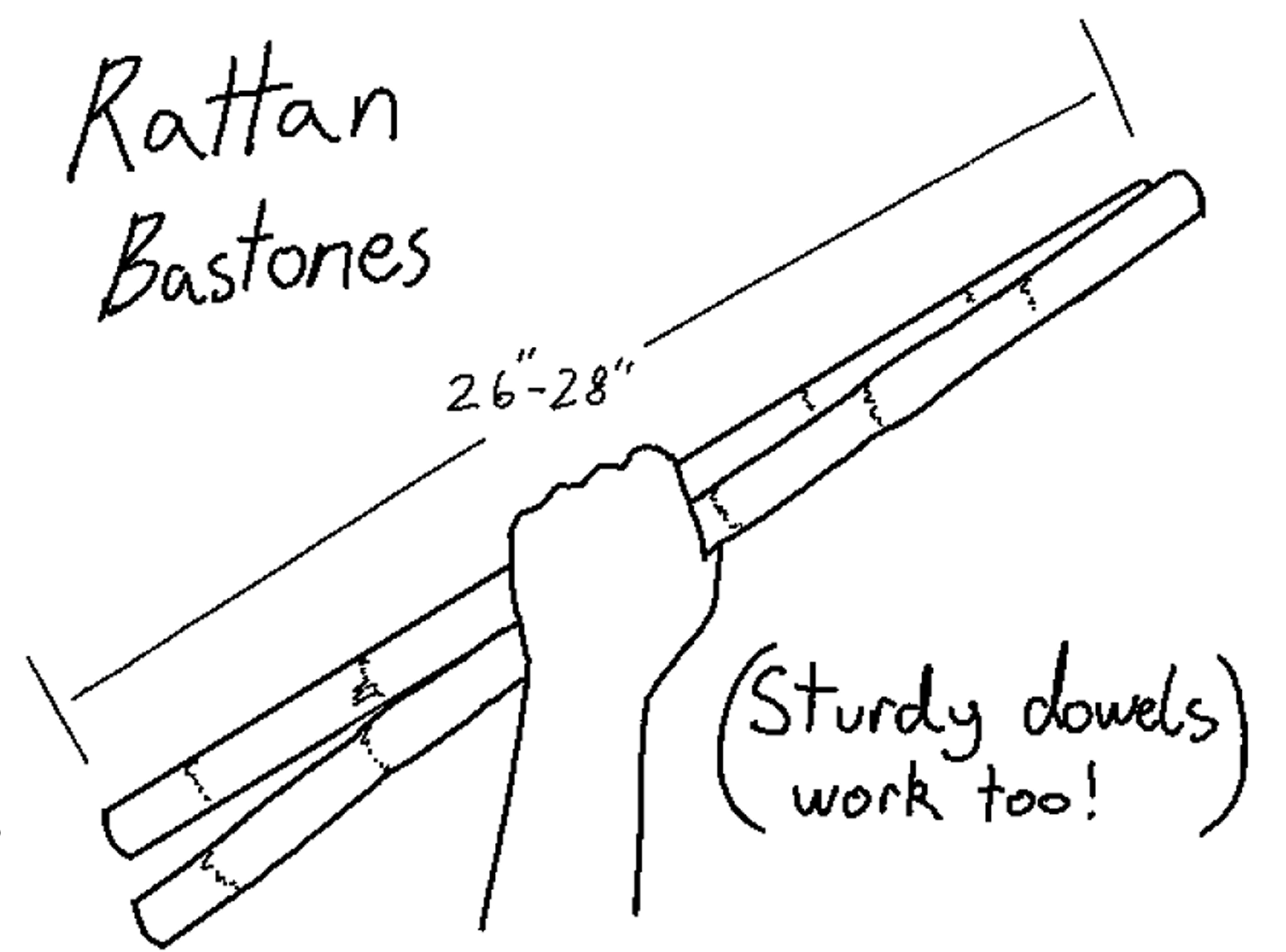
If rattan is not readily available or is too expensive to acquire in your area, an accessable alternative would be a sturdy wooden dowell. Hardware stores can cut them to length for you if you need.
Grip and Stance: Single Stick
Grip the stick firmly with a “hammer” grip, wrist straight, held vertical at chest height. Keep about two finger-widths sticking out from your palm—this end, called the punyo, is commonly utilized for close-range hooks and strikes. It is good practice to envision a “cutting edge” in line with the knuckles, as striking with this side delivers the optimal strike. Now, keep your off-hand up close to your chest for additional protection.
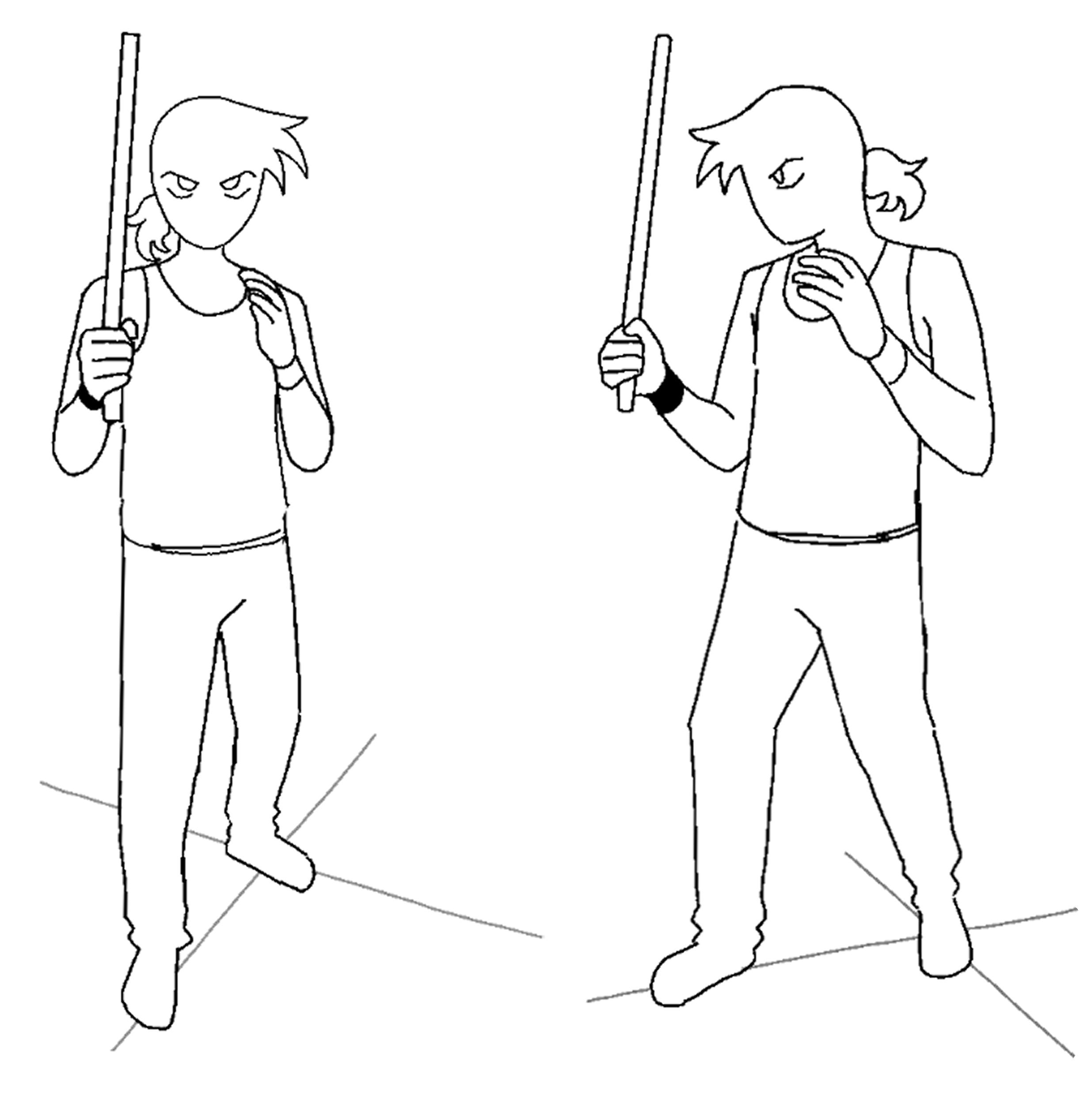
For stance, imagine a large ‘X’ on the floor. Your foot on your weapon side steps toward one tip of the X, back foot on the center. Knees are slightly bent, with your weight centered between your feet. For the back foot, weight is mostly focused on the balls of the foot. From this back foot we can generate more power for our strikes. This is your Primary Stance (Remember this X for for the next lesson on footwork!)
Grip and Stance: Double Stick

Grip and stance are the same as previous, but your dominant hand holds the stick above your dominant shoulder, and your off-hand holds it's stick below the dominant shoulder.
The Foundational Drill: Sinawali
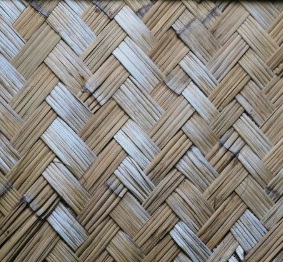
Sinawali (SEE-NAH-WALL-EE) is a double stick coordination drill that provides the foundation of movement for a lot of techniques within Arnis. The word is derived from Sawali, a type of matting woven from bamboo fibers, It's movements resemble those weaving patterns. There are many variations and permutations of sinawali, for now we'll start with what's often referred to as the Heaven 6 Sinawali.
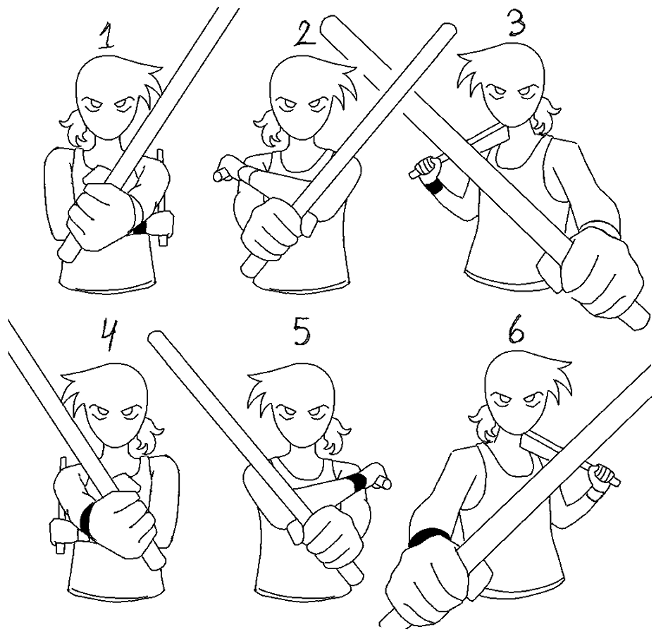
Prepare your sticks on your right side and follow along with the diagram like a mirror. First strike forward with your right hand, in subsequent movements, both hands move at the same time. Next strike forward with your left hand, while your right is chambered above the left shoulder.
Right, left, right , left and so on and so forth. The idea is to get comfortable with the flow, and to drill this movement into your muscle memory. It's kind of like a "wax on, wax off" situation, but in this case it's a little more practical!
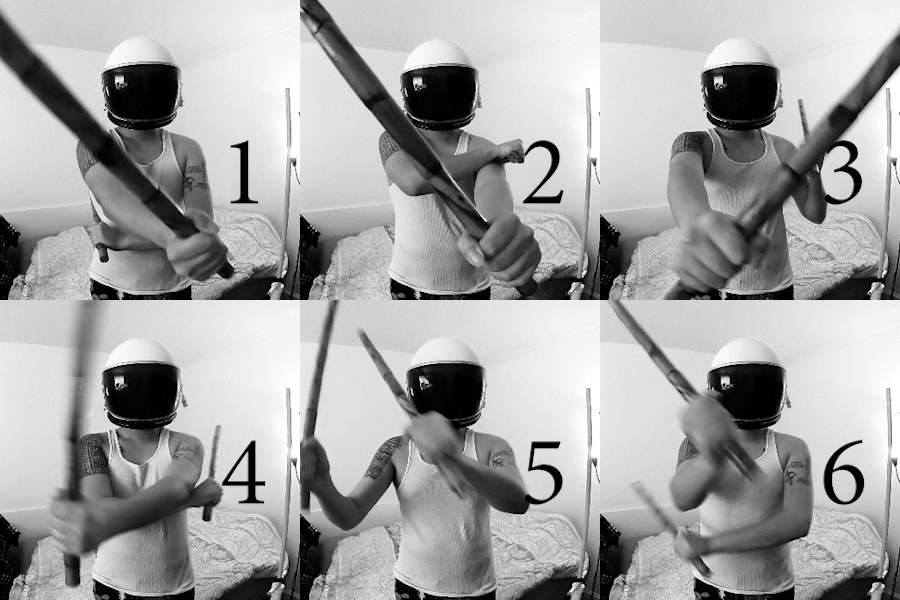
Follow along with the GIF as if I am your training partner. Match my strikes with yours, but not as a mirror: your right stick meets my right stick, and your left stick meets my left stick. Since we are facing each other, my right hand appears on the left side of the screen. Angle your stick across your body so the sticks cross at the middle.
Redonda
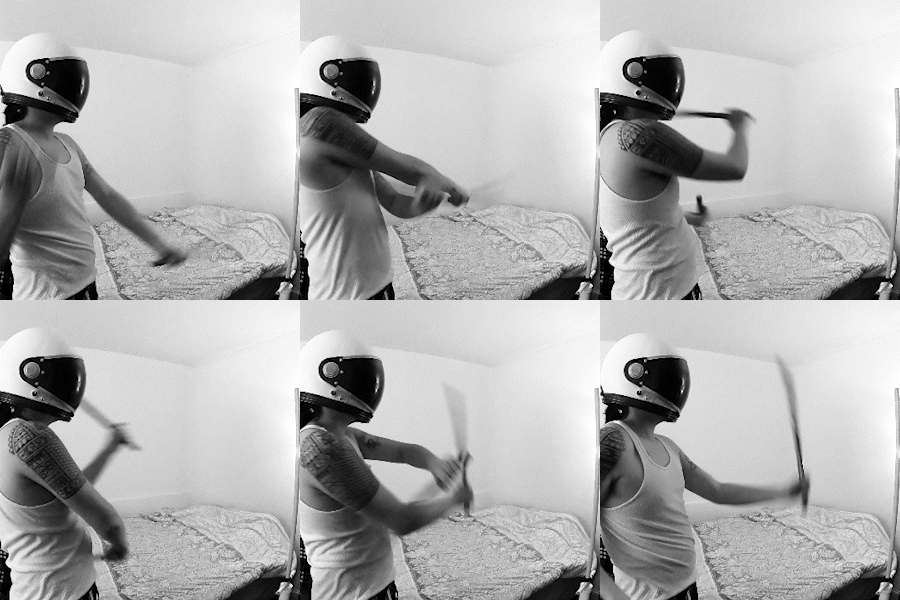
Once you feel you've got the Sinawali down, you've got a good foundation for trying the next step up, the Redonda. It's the same motions but allow your strikes to follow through instead of stop in front of you. Your arms should be swinging down, continuing a circular arc that brings them back up and ready to strike again, creating a continuous cascade of downward stikes
Conclusion
Continue to train the Sinawali and Redonda slowly and with control, focusing on smooth coordination between both hands. Try to build speed as you get more and more comfortable, and remember to breathe! These drills may seem simple at first, but they build the timing, rhythm, and muscle memory needed for more advanced techniques. With regular practice, the flow of the sticks will begin to feel like extensions of your arms themselves.