Meeting a Grandmaster: My Balintawak Story (So Far)
6/6/2026
On April 22 2026 I'd come across an opportunity I never thought would come my way!
The Family Practice
In my life, Arnis and the Filipino martial arts had only ever been something I'd practiced with my father or by myself. He'd learned with his buddies for some years in Davao right before immigrating to the states in the mid 90s, and throughout my life he'd teach me. I never got to learn the languages of the motherland growing up, and I'd always felt a sense of disconnect with the culture because of it. But Arnis, thats a dimension of the culture I know well, what I like to consider my "dialect".
Unfortunately my dialect is pretty uncommon here in the states, especially in the small and unassuming parts of the country where I'd lived. It was rare that we'd encountered other people in person who'd heard of Arnis, much less who'd practiced. The internet was our means of connecting our backyard practice with the greater world of Filipino martial arts. Practitioners on Youtube showcase a vast variety of styles; Doce Pares, Ilustrisimo, Modern Arnis, Lameco. It was there we'd first heard of Grandmaster Bobby Taboada of the Balintawak style.
Within my father's mixed arnis training he'd learned a variation of Balintawak, one colored by Kung Fu and Doce Pares influence. Taboada's Balintawak was much different; quick, efficient, and explosive. It's exclusively a close quarters style, prioritizes combat with a stick rather than blade, and it favors punching more than any other style of Arnis. Influenced by this, we'd occasionally integrate some of it's concepts into our training.
We'd watch more videos featuring Taboada and his teaching, learning more about him and his story. He'd grown up among eskrimadors in a tough part of Cebu and would go on to spread the art of his teachers worldwide, and not just that, but to help in part to make famous the Filipino martial arts as a whole! An inspiring story to be sure, one that added to my sense of cultural pride. That our culture has something that people all over the world find impressive and want to learn about, what a wonderful thing!
Hello Chicago
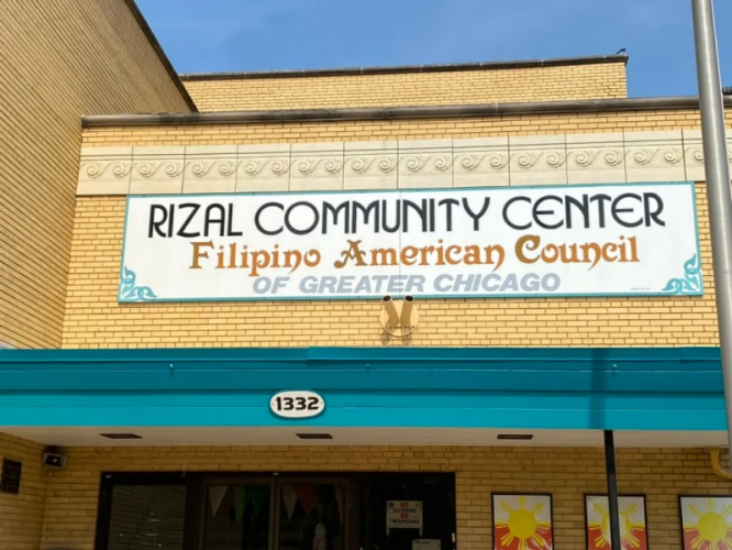
Years would pass and I'd move states away to a small town near Chicago, a city where things actually happen. At this point I was training all by myself, fighting shadows. Another year and a half would pass and I'd found out Chicago's Filipino American Community Center, aka The Rizal Center, held free Filipino martial arts classes on Sundays. Finally, a place with people to train with!
I could go on about my experience here but this story is about Balintawak, so for now I'll leave it as this: It's a great place to learn about Filipino martial arts with an experienced and down to earth instructor!
After about a month or so of training there I could already feel my skills sharpening. No amount of imaginary adversaries can compare to sparring with a flesh and blood martial artist. I was having a great time and learning a lot, the only downside to training there was that they only held classes once a week. It seems some kindly higher being had been reading my thoughts because not too long after, I came across this post from the Rizal Center's Instagram:

THE Grandmaster Bobby Taboada was coming HERE! I just about dropped my phone when I read it! I wasted no time and registered immediately. I don't make much and really I wasn't in any good financial position to be spending this amount of money, but in situations like this I feel one MUST say yes to the opportunity. "Life happens in the present" as they say, and there's no guarantee that such opportunities will come again. Additionally, signing up included one month of unlimited classes at the Chicago Balintawak school, so in my view I was certainly getting a lot for what I'm paying!
The New Student
And so it was settled, the one month countdown till Taboada's arrival had begun and the very next day I attended my first Balintawak class. They're held at a shared gym, was crowded when i showed up, lots of folks there to train boxing. I saw the instructor's face on the website so I knew who to look for, Guro Rob is his name. I thought it kinda funny that Balintawak instructors use the Tagalog word Guro instead of the Cebuano word Magtutudlo, considering the art is from the Tagalog-averse city of Cebu. I saw him across the way and he waved me over as soon as he saw me too. I was carrying an Arnis stick bag on my back and the large Filipino tribal tattoo on my shoulder was plain to see, so i suppose there was no mistaking what I was there for his class. I get to chatting with him and he asks about my background and my tattoos. I tell him I learned from my dad, and that my tattoos were done by an artist here in Chicago. Turns out he knew him! My artist started training with these Balintawak folks about a year ago, crazy coincidence!
Guro Rob was interested to see how my home grown skills would reflect in today's instruction, it was a Foundations class so the other students had only started a few months prior. He goes through the basics. The angles of swinging a stick and patterns of footwork that he'd displayed were familiar to me and I took to the instruction easily, basic stuff of course. Maybe it was just me but I got the sense he was curious, trying to gauge my ability to keep up with the instruction throughout the class. He'd speed though a sequence of strikes and tell us to mimic, and I'd mimic it well. As the class time winds down and we pack up our things I'm feeling good, I tell him glad to have started learning real Balintawak. He smiles, he tells me the real techniques start getting taught in the intermediate classes held on Saturday mornings. I ask, would it be alright if I come by to observe? He thinks for a moment then goes back to his bag to get his stick, I get mine as well. He wanted to see how much Balintawak was in what my father had trained me. I tell him I know no patterns or katas to recite, only how to react when attacked. He recognizes I was taught in the old ways and begins to feed me attacks in the patterns on Balintawak.
It is not a fight or a spar, but a controlled test to see what techniques I react with, how well I can keep up, and if I would accidentally strike him. I keep to my close range techniques and use whatever I can recall from those Taboada videos years ago. He speeds up his attacks variably and I continue to defend, making sure my counterattacks do not actually strike him. Throughout this he's teaching me Balintawak's counters where I would do something different, and I take to the instruction quickly. After this extra lesson he stops and thinks again. This is the first time I've ever had my Arnis skills evaluated. I never had any tests, no certificates, no belts, no frame of reference for where I stood in the spectrum between beginner and master. I simply knew what I knew, and hoped hey would work when attacks came my way. After his pondering he looked to me and said, come to the Intermediate class on Saturday. I guess I passed!
Intermediate
I gotta admit, I felt really cool on the drive home that day, and was SUPER excited for Saturday. I even called up my dad to let him know what had happened and he seemed pretty proud! When the day came I brought no gear and came dressed in jeans, after all, I'd only asked to observe. That would soon change however, as after some brief intoductions Guro Rob would invite me to participate anyway! The class was going over defensive drills in Balintawak's unique style. Guro Rob was right, these were the REAL techniques, just like the Taboada videos me and my dad would watch! Different angles of block, counter, block, counter. Variations on how to step off line and kick. At some points I'd continue to surprise Guro Rob with what I knew. We rotated around the class practicing different techniques with different people. Everyone I met was very welcoming, knowledgeable and eager to show me the ropes. No egos, no pecking order, no hierarchies, just the love of the practice and the sharing of knowledge. For the first time in my life I was encountering a whole group of people who knew the kinds of things I knew on a similar if not deeper level, this thing that for me was so personal yet foreign to everyone I'd ever shown it to, these were people who understood my "dialect". At the end of the class Guro Rob pulled me aside, that same look of consideration on his face, then smiled as he told me to come again next Saturday.
The following weeks I'd continue with the Saturday classes and would learn more about the Taboada Balintawak system. On the official website the curriculum is listed as follows:
Level 1 Course Examination Taboada Balintawak

-12 basic strikes form in control

-12 basic strikes form full power

-Shadow fighting form

-Basic blocks side to side

-Basic blocks high, low, center
Level 2 Course Examination Taboada Balintawak
-Level One review in Taboada Balintawak -12 defense and counter in control -12 defense and counter full power -Semi hitting while in the defensive stage strike to the head -Semi hitting while in the defensive stage strike to the elbow and head -Semi hitting while in the defensive stage strike to the knee, elbow and headLevel 3 Course Examination Taboada Balintawak
-Level One and Two review in Taboada Balintawak -Five Grouping System -Lifting and clearing -Lifting and clearing with head movement -Preparation for body flexibility -Preparation for speed and reflexes -Defense against punches while stick in fighting motionLevel 4 Course Examination Taboada Balintawak
-Level One, Two and Three review in Taboada Balintawak -Butting techniques -Pushing and pulling -Punching drills -Be able to teach Levels One and Two Taboada Balintawak CurriculumLevel 5 Course Examination Taboada Balintawak
-Level One, Two, Three and Four review in Taboada Balintawak -Disarming techniques -Application for disarming -Be able to teach Levels One, Two, and Three Taboada Balintawak CurriculumLevel 6 – Completion of the Art of Taboada Balintawak
-Level One, Two, Three, Four, Five review in Taboada Balintawak -Semi advanced techniques -Application for Semi advanced techniques -Be able to teach Level One, Two, Three, Four, Five and Six in Taboada Balintawak Curriculum -Approved to teach and Instruct Taboada Balintawak SystemLevel 7 – Full Qualified Instructor in Taboada Balintawak
-Review Level One, Level Two, Level Three, Level Four, Level Five, and Level Six in Taboada Balintawak -Develop 24 advance techniques -Teach own student Taboada Balintawak Curriculum levels 1 through 6 with successful Taboada Balintawak Curriculum testing certificate of achievement in Taboada Balintawak levels 1 through 6. -Approved to teach, Instruct, test, promote and award certificates in Taboada Balintawak
The curriculum is very much designed to make sure those who train it are deeply familiar with the system. Not a "Belt Factory" like many commercial martial arts schools tend to become, awarding colored belt advancement to students for simply being able to recite a new technique. The curriculum is designed to effectively produce those capable of responsibly and accurately propagating the art. Like I'd mentioned before, I admired Taboada's work in promoting Filipino martial arts worldwide, and it was because of this system that he was able to do it!
I believe the majority of those I was training with in the intermediate classes were at various stages of Level 2 and had been training for a few years, and along with them I was learning Level 3 and 4 techniques. Although I was able to keep up with them, I wasn't quite sure if that made me a Level 2 student by extension. During this time training with them I did begin to get familiar with their Level 1 and 2 Curriculum, basic things that I'd learned from my dad but expressed in a "Balintawak accent". Easy things to pick up but I'd never had an official test in their school, so it's probably not exactly fair to claim to be a Level 3 in their system. Regardless I felt a responsibility to get familiar with their ways of doing the basics, particularly a long sequence of strikes they call Shadow Fighting. It's a routine designed to get beginners familiar with the various ways to strike and string together strikes in combination, it is as follows:
- Down
- Down
- Up
- Up
- Center
- Center
- Center
- Angle 6 Strike
- Angle 7 Strike
- Angle 8 Strike
- 1 Half Hit
- 2 Half Hit
- Double Down
- Double Down
- Double Up
- Double Up
- Center
- 8
- 8
- Round Strike Stop
- Back
- Up
- Triple Up
- Down Touch
- Up
- Double Down
- Double Up Catch
- Up Catch
- Up
- Up
- Down
- Up
- Center
- 1 Half Hit
- 2 Half Hit
- 3 Half Hit
- Up
- 6
- 7
- 8
- 1 HH
- 2HH
- Center
- 1 HH
- 2HH
- 3HH
- Up
- Up
- 6
- 7
- 8
- 1 HH
- 2HH
- Up
- Center
The Carribean Eskrimador
On the day before the seminar Guro Rob put out a message into the class' Whatsapp group chat, asking if anyone was available to meet with a visitor to train. I had no plans for the day and I love training so I agreed, meeting up at a park that evening not far from his hotel. The visitor's name was Mattheus, born and raised in the carribean island nation of Saint Lucia, and he'd flown in with his fiance from Texas. Having had carribean friends in the past, I greeted him in the creole spoken in his home. His face lit up, delighted to see I was somewhat familiar with his culture!
Before we got started with training he asked me a peculiar question, "So, how are we doing this?". I was perplexed, was he asking if I had a lesson plan? After some back and forth he clarified, he was asking if he needed to pay me for this meeting. I laughed, of course not! It was enough for me to be meeting a fellow eskrimador, not to mention he was significantly more experienced in Balintawak than I was. If I recall correctly he said he was Level 5, I told him I was new but that I was training Level 3 techniques. He took on the role of instructor then, testing my ability to block and feed the 12 basic strikes, as well as giving me valuable feedback on how to improve! It was like a crash course on various techniques and the quirks of meeting other Balintawak practitioners, a "Balintawak etiquette" of sorts.
As it got dark I'd offered to drive them anywhere they'd like to pick up some dinner, they'd settled on the nearby Popeye's and even bought me a meal as a thank you for meeting up! As we waited for the food we'd chatted about our martial arts journeys. In addition to training Balintawak, him and his fiance were black belts in Taekwondo! After grabbing our food I took them back to their hotels. We bid farewell for the night, knowing we'd meet again for the big day tomorrow.
Meeting Taboada
Saturday morning, I showed up to the intermediate class about 10 minutes early and found some of the students were already there, just a small handful of us total. We were told Taboada was planning to come in early to oversee the class himself, and we were just as nervous as we were excited. Then, from the back of the gym, Taboada himself walked out with Guro Rob to meet us. 3 of us stood in a row like soldiers in front of him, not that anyone told us to, the nervousness directed us so. Those of us who were Filipino greeted him with "Mano Po", a traditional greeting for our elders. Taboada smiled at us, turned to Guro Rob, and joked "They are Italians, like me!". I could tell it pleased him to see fellow Filipinos engaging in our arts. Guro Rob introduced each of us one by one, giving name and level. As I was an "unorthodox" student, I was introduced differently, "He's got good control, learned balintawak from his pop". This detail peaked his interest, and he'd keep his eye on me as we trained.
After more student had arrived we went over Balntawak's basic forms in unison, the time I took at home to memorize these were absolutely paying off! We went through the level 2 curriculum: basic blocks, 12 basic strikes, and the entirety of shadow fighting. As we performed these moves, Taboada made his way around us, making corrections as he saw fit. For me he adjusted my high block, it wasn't quite high enough. I assume besides that detail my form overall was acceptable, and he was sure to scrutinize every movement from all of us that were out of line. Those of us who got feedback definitely saw immediate improvement!
After the first hour was up the foundations class arrived, I moved myself from the front towards the back of the class to give newcomers the opportunity to get close. We mostly went over basic footwork, stances, and eventually made our way to some of the things we'd gone over previously. After we'd all worked up a sweat, Taboada concluded the class by telling us all the story of his rise to fame - From humble beginnings in Cebu to being invited to teach worldwide. I won't be retelling his whole story here, that can be found elsewhere. But really, the best way to hear it is from the man himself.
Lunch with The Grand Master
Lunch at a local Filipino diner was next on the itinerary for today's events, at least for us Balintawak students. I offered to drive some of my peers, Mattheus and my tattoo artist, Joseph, accepting. We'd arrived right before Taboada arrived with Guro Rob, meeting us at the door of the diner. I held open the door for Taboada but he'd asked me a question before entering:
- GM: Your father taught you Balintawak?
- Me: That's right
- GM: Who is your father?
- Me: (I gave his name)
- GM: Where did he learn?
- Me: Davao
- GM: Who did he learn from in Davao?
- Me: Bobby Pahamotang
- GM: ...I haven't heard of him
- Me: That's ok, I didn't think you would
I took no offense. Like I had mentioned at the beginning, my father's Balintawak was colored by Kung Fu and Doce Pares influences, a far removed branch of the tree. Still, it was enough to impress him.
Around 10 of us in total, we sat around a row of tables put together, Taboada sitting next to me. After we had made our orders, I figured I ought to ask him some questions too. He was a Grand Master after all, when am I gonna have such an opportunity next?
- Me: GM, when did you know you were good?
- GM: When my master couldn't hit me anymore
- Me: (I laugh)
- GM: It's true (his face serious)
- Me: OH! (I'm embarrassed)
He told me about the hundreds of hours he'd spent learning under his master, the secret sparring sessions he'd have with his peers to test the techniques under pressure and sharpen their reflexes. Dedication and pressure testing were the keys to his quick reflexes.
I'd mentioned that I heard he learned Eskrima from his father like me
- Me: GM, you learned from your father too right?
- GM: Yes, but not Balintawak, something else.
- GM: (His curiosity peaked again) Do you have video of your father?
- Me: I do! (I showed him a video of me and my father training)
- GM: He is good, where is he?
- Me: In North Carolina
- GM: Really!? I live there, why have I not heard of him?
- Me: Oh! Because he doesn't teach
- GM: Ah, he should, he is good!
He then told me something that really struck me
GM: "You know, the duty of my FQIs (Full Qualified Instructors) is to develop 24 advanced techniques to add to the art. Become FQI, you can add your father's art. And if I like your techniques, I will teach them myself!"
I felt real proud of my dad in that moment. We had never sought validation in our practice but it was inspiring to not only get some recognition from a Grand Master, but encouragement as well. And not only that, this was a Grand Master whose work we'd respected for years. I was instilled with a new goal in my martial arts journey, to become an FQI and teach the art of my father, to honor our knowlege and culture.
So, after casually changing the trajectory of my life, we continued to chat about other things; movies in particular
- GM: Have you seen the Dune movie?
- Me: I have! They do Balintawak in their choreography right?
- GM: Yes, but they did not talk to me
- Me: Really!?
- GM: Bryan Sloyer, my FQI in LA, he does action for movies, but they did not talk to him either
It's worth mentioning that there are a handful of primary schools of the Balintawak style: Taboada, Tabimina, WOTBAG, Atillo, and Nickelstick. Each school has particular quirks of movement, slightly different philosophies on what movements to prioritize and how they teach them. As far as I could find the Dune production does not claim to take inspiration from any particular school, just Balintawak in general. I would argue however that the examples of Balintawak in the movie most closely resemble the sharp posing and emphasis on impact taught in the Taboada school, albeit stylized for use in the film.
- GM: Have you seen the movie (documentary) Kings Blade?
- Me: I have!
- GM: It was produced by my FQI in Russia, Alex Pisarkin. I have not seen him since the war though
- Me: Oh wow I didn't know that! Yea I really liked that they spoke to so many of the old grand masters
- GM: They had both me and Nick Elizar, you know Nick Elizar?
- Me: Yes! Grand Master of Nickelstick Eskrima
- GM: Me and him grew up together
- Me: Really!
- GM: Yes, we trained together. When we were little we would watch my father training
He tells me about other movies he's in; the 2016 documentary Fighting Sticks of Arnis which I hadn't seen, and a nameless production that had yet to come out. In this movie he told me he'd played a jeepny driver that fought aliens. Despite his fighting style being single-stick oriented, the production asked he utilize a double stick style. "It's ok" he said, "Movie Bobby fights with two", we laughed.
The food arrived and we'd started speaking with others at the table, I had a big plate of longsilog and he had a plate of fried tofu. He'd gotten his stomach stapled years back and couldn't eat much. One of my classmates, a fellow American-born-Filipino, wanted to ask Taboada how to say some phrases in Tagalog. I corrected him, Taboada speaks Cebuano. (While it's true Filipinos in The Philippines understand the national language of Tagalog, Cebuanos like Taboada prefer to speak Cebuano). So he rephrases his question and asks him. Taboada gets a mischevious look in his eye and tells him: "Ok, you say like this: Ako si *your name*, dako kaayo ang akong kinatawo". My classmate carefully recites the phrase given to him. "Yes! like that! You say this when you introduce yourself. Very polite, especially to women". I laugh and act surprised "What are you telling him?". I only knows bits and pieces of the Filipino languages, but I knew enough to understand a joke was being made.
Taboada laughs and starts a story. Every year there is an international gathering of Taboada Balintawak practitioners called World Camp. On one hosted in Cebu, an American who was set to address the attendees from a podium asked Taboada for a greeting phrase to use. He taught him that same phrase, and the American spoke it aloud over the mic. The room erupted with laughter from those who understood, and confusion from those who didn't. Taboada finally reveals to us at the table "In English it means: I am *name*, I have a large member". All of us at the table had a big laugh.
The lunch came to a close and we all made our way to the Filipino community center, the location of the long anticipated seminar
After The Seminar
The seminar itself was much like the training we'd done earlier in the day but done on a larger scale, with the addition of a variety of disarm techniques taught. I will say that I had learned a lot and leave it at that, as I'm more interested in retelling what you wouldn't get as a regular seminar attendee.